

You boarded looking like yourself. You landed looking like you fought a hair dryer and lost. Somewhere between the gate and baggage claim, your face filed a complaint — and honestly? It has a point. This isn’t your imagination, and it isn’t just “travel tiredness.” Skin after flying goes through a legitimately weird chain of events, and once you know what’s actually happening at 35,000 feet, the fix gets a lot easier.
Let’s board this thing properly.
Gate Check: Why Cabin Air Is Basically a Skin Villain
Airplane cabin air sits at roughly 10–20% humidity. For comparison, most deserts hover around 25%.
You are, quite literally, flying through drier air than the Sahara.
Your skin’s outermost layer relies on moisture to stay smooth, flexible, and doing its job as a barrier. Strip the humidity out of the air around it, and that moisture heads straight for the exit — pulled out of your skin and into the cabin. This is called transepidermal water loss, and it’s the number one reason skin after flying feels tight before you’ve even reached cruising altitude.
If your barrier was already a little compromised going in (over-exfoliated, sunburned, reacting to a new product), the effect hits harder. We’ve got a full rundown on what a stressed-out skin barrier looks like and how to fix it if any of this is sounding familiar.
Cruising Altitude: The Hour-by-Hour Breakdown
Here’s roughly what your face is dealing with, minute by minute:
- Hour 1: Cabin pressure drops. Blood vessels near the surface constrict slightly, which is why some people look a touch paler right after takeoff.
- Hour 2–3: Humidity plummets. Surface moisture starts evaporating faster than your skin can replace it.
- Hour 4+: Static builds (thanks, dry recycled air), oil production shifts to compensate for the dryness, and texture starts to look rough or flaky in spots.
- Descent: Pressure changes again, circulation shifts again, and puffiness — especially under the eyes — often peaks right before landing.
None of this is dramatic on its own. Stacked together over a five-hour flight, though, it adds up to the specific, slightly haunted look we all recognize as post-flight face.
The Layover Look: Dullness, Puffiness, and That Weird Tightness
Three things tend to show up together, and they’re worth telling apart because they’re not actually the same problem:
Dullness happens because dehydrated skin reflects light unevenly. Less bounce, less glow, more “did I sleep in this outfit” energy.
Puffiness is circulation- and fluid-related, not moisture-related. Sitting still for hours plus cabin pressure changes equals fluid pooling, especially around the eyes.
Tightness is straight-up water loss. Your skin is telling you, in the most dramatic way possible, that it wants a drink.
If you’re already prone to sensitivity or reactivity on the ground, flying tends to amplify it. This is basically the airborne version of what we cover in what happens when your skin reacts to the wrong products — different trigger, same overwhelmed-barrier storyline.
Turbulence for Your Barrier: The Underrated Culprits
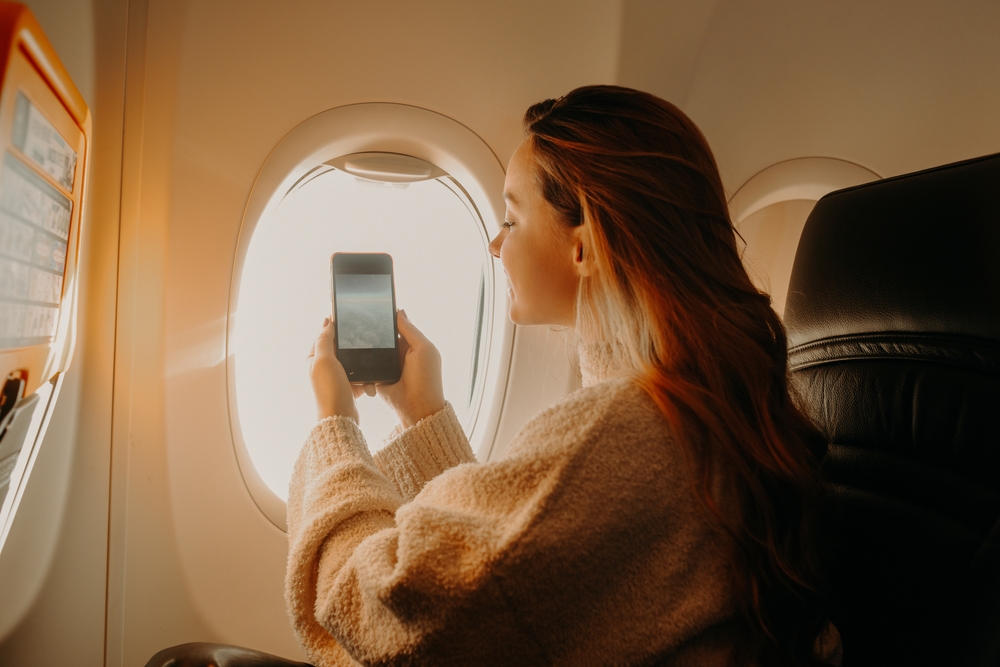
A few sneaky factors that make skin after flying look worse than a simple “dry air” explanation covers:
- Recycled air — cabins cycle filtered air, but it’s still low-humidity air, on repeat, for hours.
- UV exposure at altitude — UV rays are stronger the higher you go, and airplane windows don’t block them all. Yes, even on a daytime flight, even in seat 34C.
- Static electricity — dry air plus synthetic seat fabric equals extra friction against your face and hair.
- Alcohol and caffeine — the inflight glass of wine that felt earned is also dehydrating you from the inside while the cabin dehydrates you from the outside. Double trouble.
If sun protection habits are already a loose area for you, our sun protection archive is worth a scroll before your next window seat.
Landing: How to Actually Fix Skin After Flying
Good news — this is the reversible part. Here’s the on-the-ground game plan:
Step 1: Reintroduce moisture, fast. A hydrating mist or a richer moisturizer than usual helps your skin recover its water content within a few hours.
Step 2: Skip the harsh stuff for 24 hours. Retinoids, strong acids, and heavy exfoliation on already-stressed skin is like adding insult to injury. Let the barrier settle first.
Step 3: Cold water, not hot. Hot water strips what little moisture is left. A cool rinse feels better and does less damage.
Step 4: Hydrate from the inside too. Water, not just skincare, helps your whole system — including your face — bounce back faster.
Step 5: Sleep it off. Genuinely. A lot of “post-flight skin” is just post-flight fatigue wearing your skin as a costume. If travel fatigue is a recurring theme for you, our slow living guide has some useful resets beyond just the skincare fix.
Most people see a real difference within 24 to 48 hours of normal, boring, consistent care. Cabin skin is temporary — it’s a weather event, not a permanent forecast.
Pre-Flight Checklist: Beat It Before You Board
Prevention is genuinely easier than damage control here. Before your next flight:
- Moisturize heavier than usual right before boarding
- Bring a hydrating mist or balm for mid-flight touch-ups
- Skip new or active products the day of travel
- Drink water like it’s your part-time job
- Apply SPF even for a daytime flight — cabin windows aren’t a full shield
Curious how your current routine holds up outside of altitude, too? Start with our guide to common skin concerns and where to start fixing them — a good baseline before you add “airplane cabin” to the list of things your skin has to survive.
The Bottom Line
Skin after flying looks weird for very explainable, very fixable reasons: dry cabin air, altitude-related circulation shifts, UV exposure, and a little dehydration from that inflight glass of wine. None of it is permanent, and almost all of it responds to the basics — hydration, gentleness, and a little patience once you’re back on solid ground.
So next time you catch your reflection in the airport bathroom mirror looking mildly betrayed, don’t panic. Just moisturize, drink some water, and let your face remember it’s not actually a desert creature.
Leave A Comment