
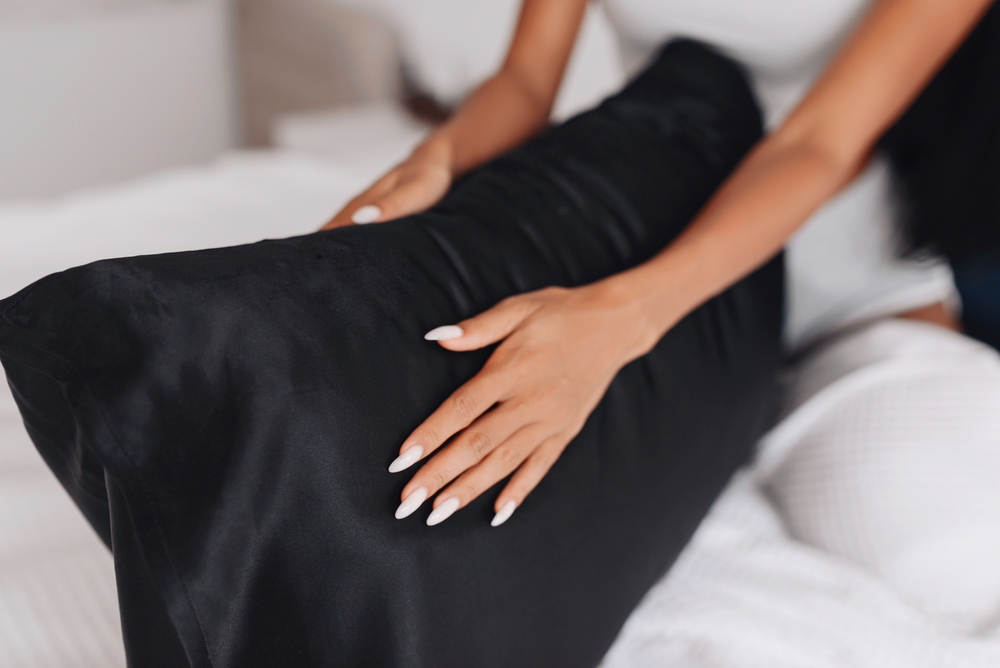
Somewhere between “essential beauty tool” and “overpriced pillowcase,” the silk pillowcase has become one of the most polarizing $30 purchases in skincare. Half the internet swears it changed their skin forever. The other half thinks it’s just the latest viral skincare trend with a marketing budget.
The truth, as usual, sits in the middle. Silk pillowcase benefits are real — they’re just more modest (and more specific) than the glowy testimonials let on. It’s not going to erase a decade of sun damage or replace your retinol. But it might quietly fix a handful of small, annoying problems you’ve stopped noticing because you assumed they were just “how mornings are.” Let’s break down exactly what you’re paying for, what’s oversold, and what actually earns its spot on your bed.
Why People Fall in Love With Silk in the First Place
It comes down to one word: friction.
Cotton has a rougher weave. It grips your hair and tugs at your skin all night while you toss, turn, and drool your way through eight hours of sleep. Silk, by contrast, is smooth on a microscopic level, so your face and hair glide across it instead of catching.
That single difference is where most of the real silk pillowcase benefits actually come from.
What a Silk Pillowcase Can Do for Your Hair
Ask anyone with textured, curly, or color-treated hair why they switched, and you’ll get some version of the same answer: less breakage, less frizz, fewer tangles at 7 a.m.
Here’s why that checks out:
- Less friction = less mechanical damage. Hair rubbing against rough fabric all night can roughen the cuticle, leading to frizz and split ends over time.
- Moisture stays put. Cotton is absorbent — it pulls moisture (and product) right out of your strands. Silk doesn’t drink your leave-in the way cotton does.
- Fewer knots, less pulling. If you’ve ever woken up looking like you fought a hedge overnight, a smoother surface genuinely helps.
If you’re already investing in a repairing hair mask or a good leave-in, a silk pillowcase is basically the “protect your investment” step — it stops your hair care from getting undone the second you fall asleep.
What a Silk Pillowcase Can (Reasonably) Do for Your Skin

This is where the claims get louder, so let’s keep it grounded.
Cotton pillowcases can crease and tug at skin overnight, especially if you’re a side sleeper. Silk’s slip means less pulling and fewer of those temporary “sleep lines” that show up in the mirror before your face fully wakes up. It’s also naturally less absorbent than cotton, so it doesn’t wick away as much of your nighttime moisturizer or leave your skin looking as crumpled as it does after a red-eye flight.
It’s also gentler on acne-prone or sensitive skin, since cotton can trap oil, sweat, and bacteria against your face more than a smoother fabric does, and silk is naturally more hypoallergenic and easier to keep clean between washes.
None of this is a wrinkle cure or an acne treatment — it’s a cosmetic assist, not a skincare product. It pairs well with whatever else you’re already doing overnight, whether that’s a lightweight night cream (we highly rate this one from Xel Ach) or a heavier occlusive like slugging. Either way, the silk pillowcase benefits for skin are genuinely worth having as a low-effort way to reduce nightly wear and tear.
What a Silk Pillowcase Can’t Do (No Matter What the Ads Say)
This is the part the marketing conveniently skips:
- It won’t undo a skincare routine that isn’t working. If your products aren’t right for your skin, no pillowcase fixes that — that’s a how you’re applying that serum problem, not a fabric problem.
- It won’t replace sleep. A silky surface makes bad sleep feel slightly nicer; it doesn’t add hours to your night.
- It’s not a substitute for hydration or SPF. Silk reduces friction. It does not moisturize, exfoliate, or protect from UV.
- It won’t outperform a genuinely great hair care routine. Product, not pillowcase, is still doing 90% of the work.
Basically: silk pillowcase benefits are additive, not miraculous. Think “nice supporting actor,” not “solves everything.”
How to Actually Get What You’re Paying For
Not every silk pillowcase delivers the same results, and this is where people get burned (sometimes literally, by cheap satin that pills after two washes). Quality fabric is non-negotiable if you actually want the silk pillowcase benefits described above instead of a slightly shinier version of the same friction problem.
Look for:
- Mulberry silk, specifically — it’s the higher-quality, more durable option
- 19–22 momme weight, which is the sweet spot between durability and softness
- A zipper or envelope closure, so it doesn’t slide off mid-REM cycle
Skip:
- “Silk-feel” polyester or satin blends, which reintroduce the friction you’re trying to avoid
- Ultra-cheap options under a certain price point — they thin out and lose their smoothness fast
Wash it gently (cold water, mild detergent), so you’re not accidentally undoing the benefit with harsh laundry habits.
So, Are the Silk Pillowcase Benefits Real Enough to Warrant a Swap?
A silk pillowcase isn’t a gimmick, and it isn’t a miracle. It’s a small, low-maintenance swap that reduces friction-related hair and skin wear over time — the kind of quiet upgrade that fits neatly into an already-solid morning routine rather than replacing one.
If your hair and skin routine is already dialed in, this is the kind of low-effort addition that compounds nicely. If your routine has bigger gaps — wrong products, inconsistent habits, skipped SPF — a pillowcase won’t paper over those cracks.
So: worth it? For the price of a couple of coffees, yes — as a supporting player, not a headliner.




Leave A Comment